
By Hariz Khairi • Updated September 2026 • 10 min read
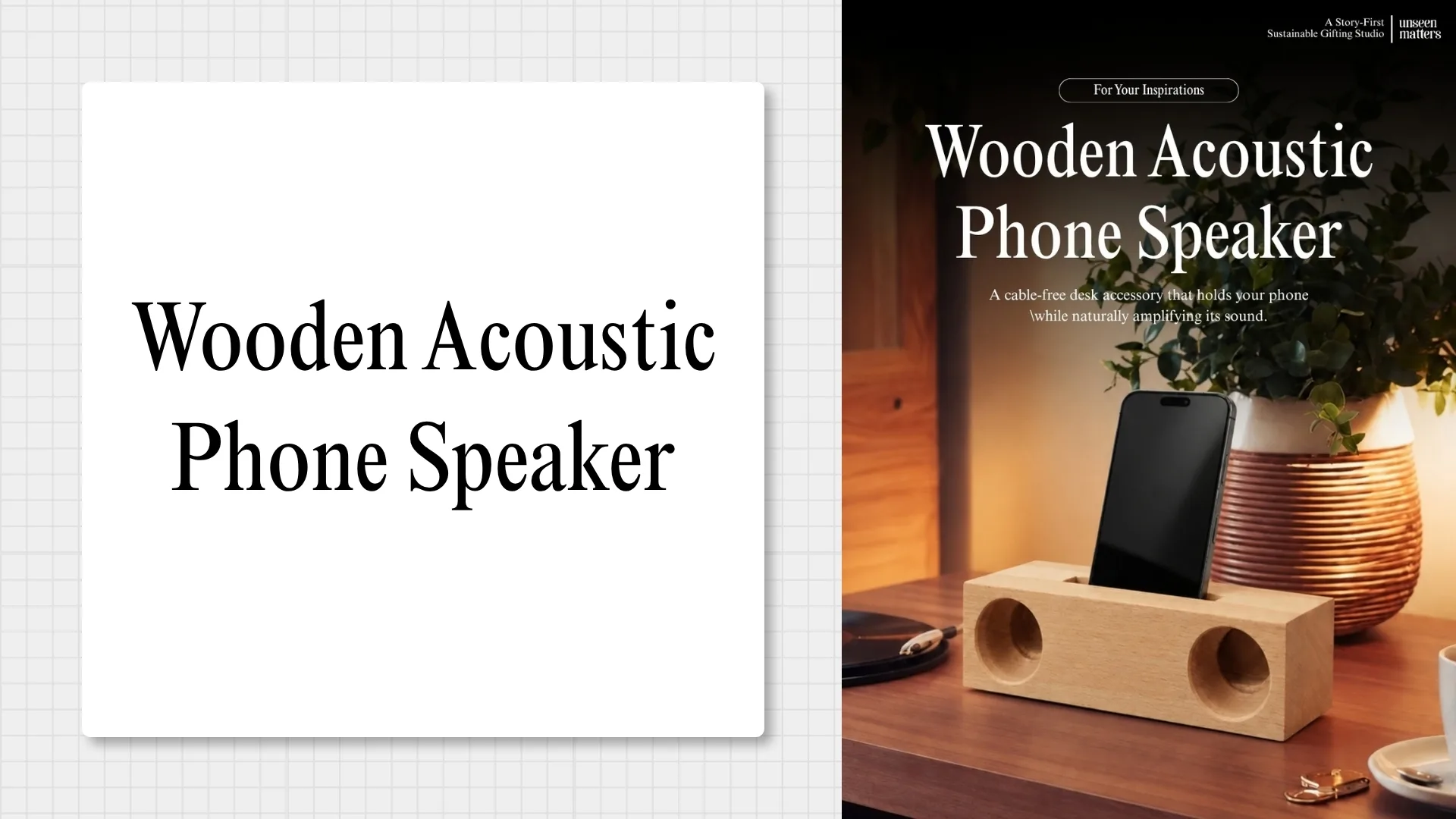
A corporate gift is most useful when it fits naturally into someone’s day. The Unseen Matters Wooden Acoustic Phone Speaker is designed for exactly that: it gives a phone a place to stand while directing its sound through the shape of the wood. There are no batteries to charge, cables to connect or Bluetooth settings to manage. Place a phone in the slot, play audio and let the speaker’s hollow structure do the work.
This desk accessory offers a different kind of gift inspiration from the usual branded merchandise. Its wooden construction gives it a warm, simple appearance, while the option to add a company logo makes it suitable for an event, client gift or employee appreciation programme. It’s an object someone can keep within reach, rather than put away after receiving it.
What Is a Wooden Acoustic Phone Speaker?
A wooden acoustic phone speaker is a phone stand with an internal sound channel that directs audio from the phone’s own speaker toward the listener.
The phone sits in a slot at the top of the wooden block. When audio plays through the phone’s built-in speaker, the sound enters the channel and travels toward the two circular openings at the front. It’s a passive object — no electronic amplifier, no built-in driver, no power source. Its shape redirects the sound already coming from the phone; it doesn’t generate sound independently.
The Unseen Matters design keeps that mechanism visible without looking like a piece of electronic equipment. The smooth wooden block can sit on a desk, side table or shelf, and when the phone is removed it remains a neat, self-contained object rather than an obviously empty gadget dock.
As a gift, it offers organisations a starting point with a clear, demonstrable purpose. People can use it while listening to a podcast, playing background music or watching a short video at their desk. The experience needs little explanation, which matters for gifting programmes where there’s no time to walk every recipient through a product.
Does the Wooden Acoustic Speaker Need Batteries or Charging?
No — the speaker needs no batteries, cables or Bluetooth pairing, because it works with audio the phone is already playing.
Many audio products arrive with a list of things to do before they can be used: charge the device, find the right cable, turn on Bluetooth, pair it with a phone. A passive acoustic speaker skips all of that.
Because it draws on the phone’s own sound rather than generating its own, it’s convenient to move between rooms or place on a desk where a power socket is out of reach, and there’s no separate battery for the recipient to maintain.
There are real limits worth stating plainly. It won’t behave like a powered Bluetooth speaker, and the result depends on the phone’s speaker, its position in the slot and the audio being played. It’s best understood as a desk accessory that changes how a phone’s existing sound is heard, not a substitute for a powered speaker. Being upfront about that helps recipients appreciate it for what it actually does.
How Does the Wood Direct the Sound?
Sound from the phone enters a passage inside the wooden block, which channels it toward the front openings and changes how it reaches someone sitting nearby.
Sound from a phone normally travels outward from its small built-in speaker in every direction. When the phone sits in the wooden slot, part of that sound enters the speaker’s internal passage, which guides it toward the two front openings. The shape can make audio seem more directed or noticeable in front of the object — without adding any power or amplification, since none of the sound’s energy is increased, only its path is shaped.
The mechanism is also part of the experience. A recipient can understand what’s happening just by looking at the product: the phone goes into the slot, the openings face the listener, and there are no hidden controls or instructions to learn before first use.
Phone models differ, so fit and results vary. A case can affect how a phone sits in the slot, and different phones place their built-in speakers in different positions. If a company is ordering these for a particular group, it’s worth discussing the intended phone models and product dimensions before confirming the gift.
Why Does a Desk Accessory Make a Good Corporate Gift?
A desk accessory has a better chance of being kept because the recipient can immediately picture where it belongs and how they’ll use it.
Recipients may have very different tastes in decoration, but many use a phone throughout the day. A gift that supports an existing habit asks little of them — they don’t need to build a new routine around it. The speaker can hold a phone during the workday, then serve as a simple way to play audio during a break, without asking the recipient to change how they already work.
The gift also feels more considered when its function is visible rather than explained on a card. The slot and front openings show what the object does, and that visible purpose invites someone to try it, which makes the handover itself more engaging than handing over an item whose purpose isn’t obvious.
Function alone doesn’t guarantee everyone will use a gift — some people prefer headphones, or already own a powered speaker. The aim is a well-made option that feels appropriate to the audience and occasion, and for teams planning a desk-focused gift, this speaker gives that conversation a concrete starting point.
What Gives the Speaker Its Natural Desk Presence?
The speaker’s grain and simple rectangular shape let the wood itself be the visual feature, rather than dressing up a plastic or metal base.
Wood gives this object a different presence from plastic or metal electronics. Its grain and colour bring warmth to a work surface, whether the desk is at home or in an office, and the form stays simple: a rectangular block, a phone slot, two circular openings. That restraint leaves room for the material to be seen — it can sit alongside a notebook, plant or monitor without needing the rest of the desk to match it, and when the phone isn’t in the slot, the speaker still reads as a complete object rather than an empty accessory.
The wooden construction is a visible part of the design here, not a decorative finish added to conceal another material underneath. If a gifting brief includes specific sourcing or environmental requirements, those should be discussed directly with the studio so the final product and any claims made about it stay accurate.
A desk item gets encountered often, so its appearance matters as much as its first impression at an event — the speaker’s natural finish suits that longer, quieter role better than something designed only to look good in a single handover photo.
Can You Add a Company Logo to the Speaker?
Yes — a company logo can be added as a textured sticker on the speaker’s front face, positioned between the two sound openings.
Customisation gives the gift a direct connection to the organisation giving it. For a conference, the logo can identify the host. For an employee gift, it can connect the item to a team or company milestone. For a client gift, it can serve as a reminder of the relationship.
Placement should still respect the object’s function — the phone slot and sound openings do real work, so the broad front surface between them is where branding fits naturally. A logo sized to that surface will usually read more clearly than one crowded with extra text or messaging.
Before ordering, prepare a clear version of the logo and think about how it will sit against the wood tone. Simple artwork tends to read well at a glance, though the right treatment depends on the specific design. Discussing size, colour and placement early helps the customised piece feel intentional rather than added as an afterthought.
When Does This Gift Make Sense for a Gifting Programme?
The speaker works best for recipients who are likely to use a desk — office teams, remote workers, event speakers, clients or partners — because its function stays relevant beyond the day it’s given.
It can suit a welcome gift for new employees, a thank-you for conference participants or an appreciation gift for a client group. A small internal gathering and a large public event may call for different quantities, branding choices and presentation, so the best use depends on the purpose of the specific programme rather than the product alone.
When choosing between gift options, it helps to start with the recipient rather than the product category: what do they already use during the day, where are they likely to keep the item, will they understand its function immediately? Those questions make it easier to decide whether a desk accessory is the right choice for a given audience.
The speaker works especially well when the brief calls for something simple and tactile. A recipient can pick it up, see the wood, place a phone inside and try it — that direct interaction tends to make a gift more memorable than a list of features printed on packaging.
What Should You Look for in a Desk-Focused Conference or Event Gift?
A desk-focused event gift should have an obvious place in the recipient’s routine after the event ends, not just a role during the handover.
Conference gifts often need to do more than one job — thank attendees, recognise speakers, or help people remember the organisation that brought them together. Some gifts are useful only during the event itself; a desk accessory has a potential place in the recipient’s daily routine afterward, which gives the event a second chance to be remembered weeks or months later.
The speaker also has an advantage during the event itself: its function is easy to demonstrate on the spot. A guest can place their own phone in the slot and hear the change immediately, without downloading an app, charging anything or connecting a device first. That live demonstration can do more to sell the gift than a description on a card.
If you’re weighing a desk accessory against other event-gift formats, it comes down to how much of the recipient’s day happens at a desk. A speaker audience that’s mostly on their feet — trade show visitors moving between booths, for instance — may get less lasting use from it than an audience of desk-based attendees or remote-working clients. Match the format to how the recipient actually spends their time, not just to the occasion.
Is the Wooden Acoustic Speaker an ESG-Compliant Gift?
Natural material and a no-power design are real, describable features, but neither one alone proves an ESG or sourcing claim — ask the studio directly for that documentation.
Some organisations search for an ESG corporate gift because they want their gifting choices to reflect broader company values, which is a reasonable starting point, but the label should lead to specific questions: What material is used? How is the item intended to be used? Which claims about it can actually be supported?
The wooden acoustic speaker offers one clear functional feature: it operates without batteries or a powered connection. Its wooden body is also central to how it looks and works. Both of those can be described plainly, without stretching them into a claim about the product’s wider environmental footprint.
Natural material doesn’t, on its own, establish the sourcing history of a product, and a product that needs no power during use still has a production and delivery process behind it. If an organisation requires verified sourcing information or specific documentation for an internal approval process, it should ask for that directly during the enquiry rather than assuming the material implies it. The strongest gifting story is usually the one that stays close to what the product actually offers.
Should You Choose a Passive Speaker or a Bluetooth Speaker?
Choose the passive wooden speaker for a compact, cable-free desk object with natural wood as the main feature; choose a Bluetooth speaker when the priority is louder sound for a larger room.
Passive wooden speaker: no power source, holds and directs sound from the phone’s own speaker, nothing to charge or pair, suited to casual desk-level listening.
Bluetooth speaker: has its own audio components and can produce louder sound, but normally needs charging and a paired connection to the phone or another source.
That distinction should guide the choice. If the brief calls for a compact object with wood as its main visual feature, the passive speaker is worth considering. If the main requirement is powerful sound for a larger room, a different product will likely serve better. Matching expectations to the product matters here — the charm of the wooden design is the immediate, cable-free interaction of placing a phone in it and hearing the change, and it should be introduced on those terms rather than compared to an electronic speaker on features it was never built to provide.
Why Is the Speaker Easy to Understand at a Glance?
The slot shows where the phone goes and the front openings suggest where sound comes out, so a recipient can grasp the product’s purpose without an explanation.
This matters for occasions where organisers have little time to introduce each item individually. A product card could briefly explain the sound channel, but recipients can also just discover it by trying the speaker — that moment of discovery is part of the gift’s appeal, not a gap that needs filling with more text.
The two functions remain useful separately, too. Someone might place a phone in the slot while reading a message or following a short video, even without playing music, and when they do want to listen, the same object is ready to direct the phone’s audio without any extra step.
Ease of use matters because a gift can be attractive yet still go unused if it asks too much of the recipient. Here the interaction is immediate, and the design doesn’t require the recipient to keep track of a cable, charger or extra component.
How Do You Brief a Custom Wooden Acoustic Speaker Order?
A useful speaker brief covers the recipient audience, the logo artwork and placement, the quantity and delivery deadline, and any sourcing documentation your organisation needs.
Start with the audience and occasion — whether the speaker is intended for clients, employees, speakers or attendees changes how prominent the branding should be and how the gift will be presented. A client gift and an internal employee gift often call for different levels of formality in the packaging and messaging.
For the branding itself, provide logo artwork and any brand rules your organisation follows, and mention whether the textured sticker should carry only the company logo or an event-specific mark. That artwork gets reviewed against the space available on the speaker’s front face, which is narrower than a printed mug or a flat plaque, so simpler marks tend to translate better.
Share the required quantity and delivery deadline early, particularly if the speakers need to arrive before a fixed event date, and flag if there are multiple delivery locations or if the speaker will ship as part of a larger set rather than on its own.
If your organisation needs particular sourcing or material documentation for an internal approval process, raise it directly in the same enquiry. A clear brief lets everyone discuss the actual product rather than relying on assumptions about what “sustainable” or “wooden” implies on their own.
How Does the Speaker Fit Into a Larger Gift Set?
The speaker can stand alone or be paired with other desk items, depending on the event, audience and budget, as long as each piece in the set serves a distinct purpose.
For a desk-focused gift set, it’s worth avoiding a box full of similar accessories with overlapping functions — the speaker’s role should stay clear alongside whatever else is included. Presentation should make its function easy to notice: if a recipient can’t immediately tell what it is, a short line explaining that it holds a phone and directs its sound can help, and a live demonstration at an event does even more, since the recipient hears the effect while holding the object.
Worth asking before deciding how to package or pair the item: will it be easy to place on a desk, does the branding feel comfortable to display, is the function useful without any extra setup? Thoughtful presentation doesn’t need to be elaborate — it needs to connect the gift to the reason it’s being given. A simple explanation of why the organisation chose a wooden, power-free desk accessory can be more memorable than a long list of promotional claims stacked around it.
How Can You Order a Sustainable Corporate Gift From Unseen Matters?
Share your recipient audience, quantity, delivery deadline and branding requirements with Unseen Matters, and the team will scope a direction suited to the occasion.
The Wooden Acoustic Phone Speaker turns a straightforward idea into a useful object: it holds a phone, directs its sound through a wooden structure, and needs no batteries, cables or Bluetooth pairing to do so. Its front surface can also carry a company logo as a textured sticker, connecting the object back to the organisation giving it.
Those qualities make it worth considering for organisations that want a gift with an everyday role rather than a one-time novelty. It’s easy to demonstrate, simple to use, and designed to sit where the recipient may see it often — the natural wood gives it a warm appearance, while the customisation ties it to the giver.
If you’re planning a conference gift, employee appreciation programme or client gift, share your quantity, delivery deadline and branding requirements with Unseen Matters. Browse the full catalogue at unseenmatters.com, then get in touch to discuss whether the Wooden Acoustic Phone Speaker fits your occasion.
YOUR COMMENT