
By Hariz Khairi • Updated May 2026 • 8 min read
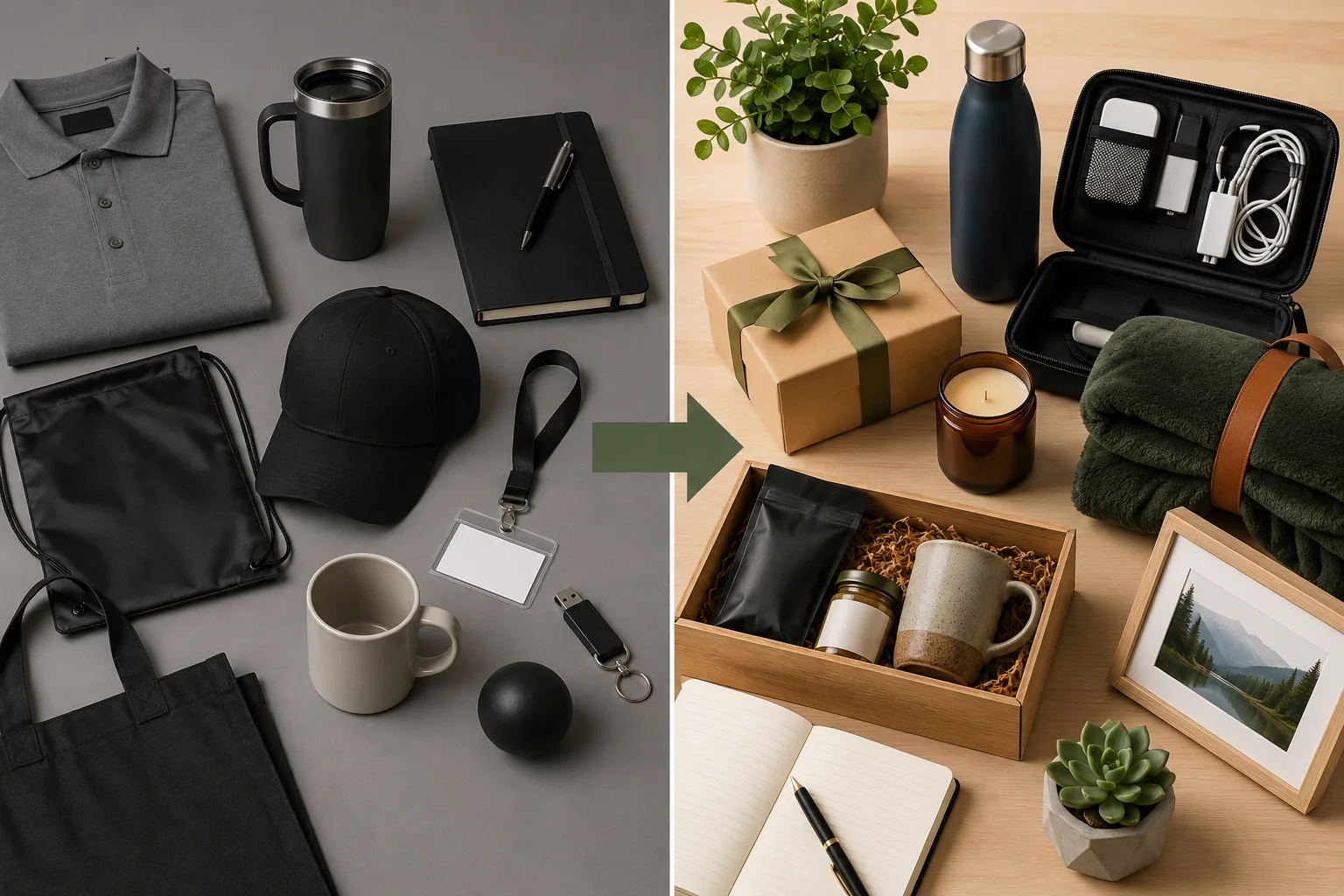
Most corporate gifts share one thing in common: nobody asked for them. They arrive, get placed on a desk for a week, then disappear into a drawer or a bin. This guide names the worst offenders — and offers a better way to think about each one.
After working with 400+ corporate clients across 18 countries — including Google, Petronas, Clarins, and Mercedes-Benz — we’ve seen every kind of gift land and fail. The problem is rarely the budget. It’s the absence of a story.
1. The Stainless Steel Tumbler
Why it’s a cliché: Every company has given one. Every recipient already owns three. It signals effort but communicates nothing about who you are as a brand.
What to give instead: A tumbler made from recycled stainless steel. Same form, same function — but the material carries a different story. The steel has a previous life. That provenance is worth communicating. A short note explaining the material origin transforms an object people would otherwise overlook into one they talk about. The product doesn’t change. The intention behind it does.
2. The Canvas Tote Bag
Why it’s a cliché: Well-intentioned, functionally redundant. Most recipients own more tote bags than they can use. A logo on canvas is not a gift — it is advertising with a handle.
What to give instead: A custom-made batik tote bag, crafted to brief. Batik is Malaysia’s living textile tradition — each print can be commissioned to carry a motif specific to your brand, your campaign, or the occasion. The result is something no other company has given, because no other company had that conversation with a craftsperson. It carries the weight of intentionality in a way a canvas bag never can.
3. The Notebook and Pen Set
Why it’s a cliché: Safe, forgettable, given by every company at every conference since 2005. Notebooks are useful — which is exactly why yours won’t stand out.
What to give instead: A stone paper notebook paired with a pen made from recycled plastic and bamboo. Stone paper is produced without a single tree — it is made from calcium carbonate, is waterproof, and feels unlike any paper your recipient has held before. The bamboo and recycled plastic pen completes a set where every material has been chosen with a reason. Together, they start a conversation. A standard notebook and pen set never does.
4. The Lanyard
Why it’s a cliché: A conference utility item that ends with the event. The moment the badge comes off, the lanyard follows.
What to give instead: A custom-made adjustable strap with pockets — a fully designed lanyard set built for daily use beyond the event context. Pockets for cards, transit passes, or keys. Adjustable fit. Designed to be worn, not discarded. When a lanyard is engineered for life after the conference, it stops being event merchandise and becomes a genuine carry accessory. That is a different category entirely.
5. The Polo Shirt
Why it’s a cliché: Standard uniform logic applied to gifting. The logo placement communicates visibility, not appreciation. Most corporate polo shirts are worn once, if at all.
What to give instead: A polo shirt made from recycled plastic — specifically, fabric derived from post-consumer plastic bottles. The garment looks and wears like any quality polo, but the material tells a story about what your brand chose to do with waste. For clients who want to elevate further, pair it with a hangtag that states exactly how many bottles went into each shirt. That number makes the gift tangible. Tangible gifts are kept.
6. The Powerbank
Why it’s a cliché: Tech gifts age quickly. A powerbank is a commodity. It communicates nothing about your brand except that someone approved a budget line.
What to give instead: Two directions, depending on your brand positioning. The first: a wind straw powerbank — compact, distinctive in form, built around a material and design language that breaks from the standard brick format. The second: a solar panel powerbank in a bamboo housing — functional sustainability, not decorative sustainability. It charges from sunlight. That is a product story that tells itself every time someone uses it outdoors.
7. The USB Thumb Drive
Why it’s a cliché: Cloud storage made this redundant years ago. Giving a USB drive in 2025 communicates that nobody reviewed the gift brief since 2015.
What to give instead: A two-in-one pen and USB. The writing instrument and the storage device share a single object — one thing that does both jobs, with neither function compromised. For recipients who still work with physical files, this is genuinely useful. For everyone else, the pen remains. The design solves the redundancy problem by embedding the USB into something people carry regardless.
8. The Umbrella
Why it’s a cliché: Useful in a country that rains daily. Also given by every bank, insurer, and property developer in Malaysia. The category is so saturated that an umbrella no longer says anything about the giver.
What to give instead: An umbrella made from recycled plastic — canopy and frame components produced from post-consumer material. In a category where every competitor is giving the same object, the material distinction is the only available differentiator. Recipients may not always read the swing tag, but brand managers will — and that is your actual audience.
9. The Ceramic Mug
Why it’s a cliché: Office pantries are full of them. They accumulate. Most are never used past the first week.
What to give instead: A mug made from coffee grounds — a composite material produced from post-extraction coffee waste, bound and formed into a vessel that is warm to the touch, slightly textured, and unlike anything in a recipient’s existing collection. It looks and behaves like ceramics but carries a material story that ceramics cannot. For brands in the food, beverage, or lifestyle space, the alignment is immediate. For any brand, the object generates questions. Questions are where brand conversations begin.
10. The Baseball Cap
Why it’s a cliché: Works for streetwear brands and sports sponsorships. For most corporate contexts, a cap with a logo reads as low-consideration gifting — something ordered because caps are inexpensive, not because anyone thought about the recipient.
What to give instead: A cap made from cork — a natural, harvested material that is lightweight, water-resistant, and visually distinctive. Cork is harvested without cutting the tree; the bark regenerates. That material story is printed into the object’s texture. A cork cap is not trying to be a premium cap. It is a genuinely different object, and recipients notice the difference the moment they hold it.
Honourable Mentions
Sticky note sets → Replace with seed paper notepads. Write on them, tear them out, plant them in soil. The gift has a second life as herbs or wildflowers.
Hand sanitiser bottles → The pandemic default that never quite left. Replace with a concept-driven scent object — a room mist or solid fragrance in sugarcane or jute packaging — tied to your brand’s story.
Jute bags with a logo → The “eco” gift that communicates minimal thought. Replace with bags made from Recycled Marine Plastic, certified by the Global Recycle Standard and carbon offset. These are not just sustainable in claim — they carry third-party verification. GRS certification means the recycled content is traceable. Carbon offset means the production footprint has been addressed. That is the difference between a sustainable-looking gift and a gift with a defensible sustainability position.
The Actual Problem
None of the items above are inherently bad objects. Tumblers hold liquid. Notebooks hold notes. Polo shirts are worn.
The failure is not the product. It is the absence of intention.
When a brand chooses a gift without a story — without asking why this object, why this material, why now — the recipient feels that absence. The gift communicates nothing except that a decision was made and a budget was spent.
At Unseen Matters, we call this the difference between a gift and a gifting decision. The object is the last step. The story — the material choice, the concept, the connection to your brand’s values — comes first. That is what makes something worth keeping.
If your corporate gift could have been given by any other company, it probably should have been given by none.
Frequently Asked Questions
What are the most common corporate gifts to avoid? The most overused corporate gifts are stainless steel tumblers, canvas tote bags, notebook and pen sets, lanyards, polo shirts, powerbanks, USB thumb drives, umbrellas, ceramic mugs, and baseball caps. These items are widely given because they are safe and functional — but for the same reason, they are rarely memorable or meaningful.
What makes a corporate gift memorable? A corporate gift is memorable when it has a clear reason to exist — a specific material, a story behind the object, or a connection to the brand giving it. Generic utility is not a story. The gifts recipients keep longest are those that communicate intention: why this object, why this material, why from this brand.
What are good sustainable alternatives to common corporate merchandise? Sustainable alternatives include recycled stainless steel tumblers, stone paper notebooks, recycled plastic and bamboo pens, coffee ground mugs, cork caps, recycled plastic polo shirts, solar bamboo powerbanks, and bags made from Recycled Marine Plastic certified by the Global Recycle Standard. The key distinction is material specificity — a gift described only as “eco-friendly” is not the same as one with a traceable, certified material origin.
What are the best sustainable corporate gift options in Malaysia? In Malaysia, strong sustainable corporate gift options include batik tote bags commissioned from local craftspeople, Orang Asli-woven rattan pieces, coffee ground drinkware, stone paper stationery, and Recycled Marine Plastic bags certified under the Global Recycle Standard with carbon offset. Unseen Matters, a story-first sustainable gifting studio based in Kuala Lumpur, produces fully customised gifts across all of these material categories for clients including Google, Clarins, Petronas, and Mercedes-Benz.
What should I look for in a corporate gifting partner in Malaysia? Look for a partner that leads with concept before product — one that asks what story your brand wants to tell before presenting any object. The material should serve the narrative, not the other way around. A strong gifting partner offers full customisation, material transparency, and third-party certifications where relevant. Certifications such as the Global Recycle Standard provide traceability that self-declared sustainability claims cannot.
Unseen Matters is a story-first sustainable gifting studio based in Kuala Lumpur. We work with corporate clients across Malaysia and 18 countries to create gifts that are fully customised, sustainably made, and rooted in concept. Clients include Google, Meta, Clarins, Petronas, and Mercedes-Benz.
YOUR COMMENT