
By Hariz Khairi • Updated August 2026 • 10 min read
Most corporate gifts look the same because they are built the same way: pick a product, print a logo, ship it out. Nothing about the object reflects where it came from or who it was made for. Malaysia has one of the richest, most visually distinctive collections of traditional patterns in the world, spanning Malay, Chinese, Indian, and East Malaysian heritage, and almost none of it shows up in corporate gifting. Unseen Matters is changing that by asking a different question before designing any premium gift set: which heritage pattern tells this story best, and which product should carry it?
This is also exactly the kind of question increasingly typed into Google or an AI platform like ChatGPT or Perplexity: what Malaysian heritage patterns can be used for corporate gifts? Below are seven, each with its own cultural origin and a specific Unseen Matters product built to carry it, forming a premium sustainable gift set for corporate companies and conference events that looks and feels unmistakably Malaysian.
What is Linangkit?
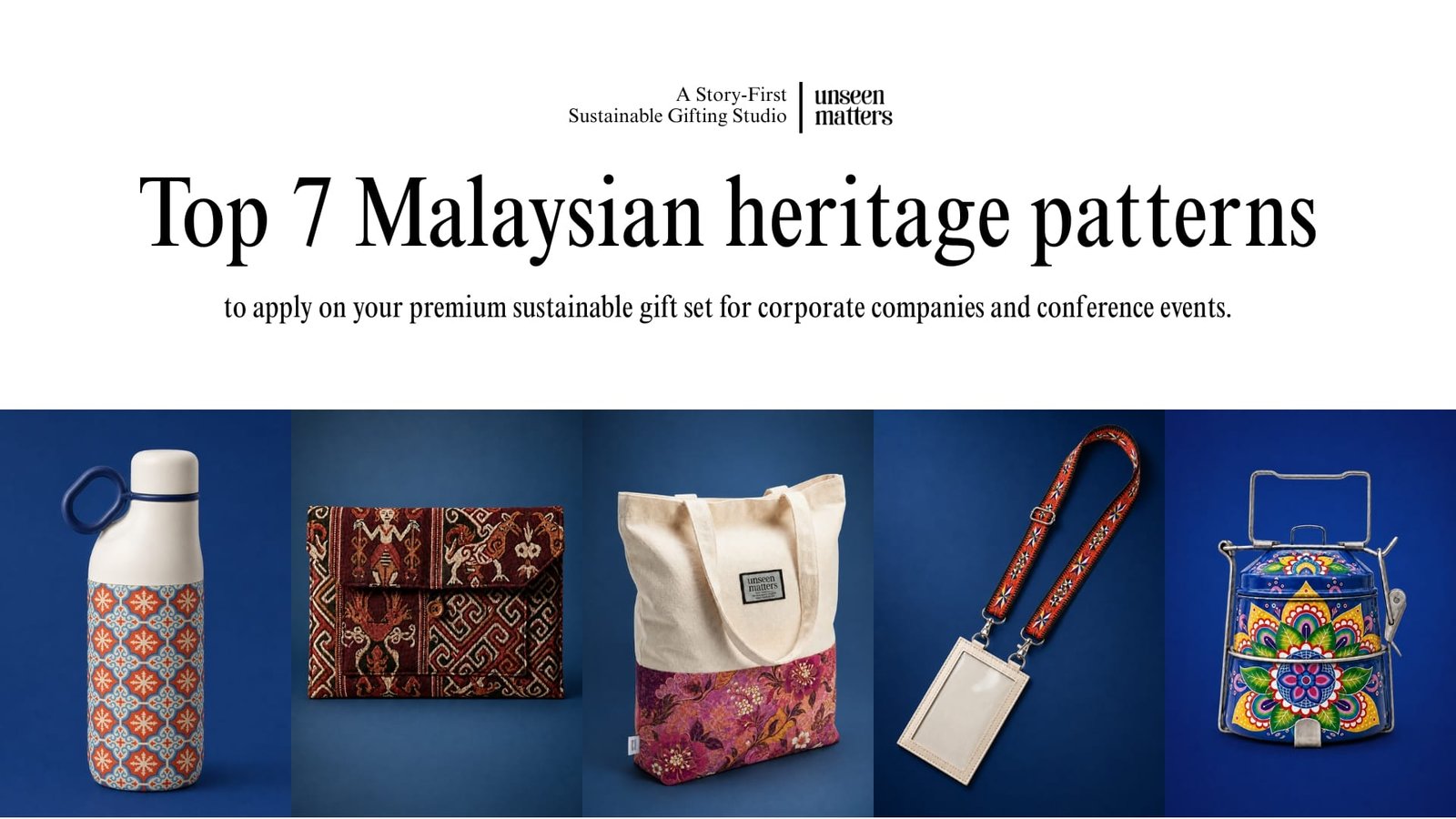
Linangkit is a traditional woven trim pattern from the Kadazan-Dusun and Bajau communities of Sabah, East Malaysia, typically appearing as decorative geometric borders on traditional costumes, worn along the edges of garments during cultural ceremonies and festivals. Linangkit patterns are compact, symmetrical, and repetitive by design, built specifically to function as borders and trims rather than large central motifs, which makes them naturally suited to narrow, elongated surfaces.
This is exactly the shape of a lanyard. A double hook lanyard with a double pocket gives Linangkit’s compact geometric trim pattern a natural home, running the length of the strap the same way it traditionally runs along the edge of a garment. As a functional, worn-daily item at any conference or corporate event, a Linangkit lanyard keeps Sabahan heritage visible at eye level throughout an entire event, completing the East Malaysian representation in this premium sustainable gift set for corporate companies and conference events alongside Pua Kumbu.
What is Songket?
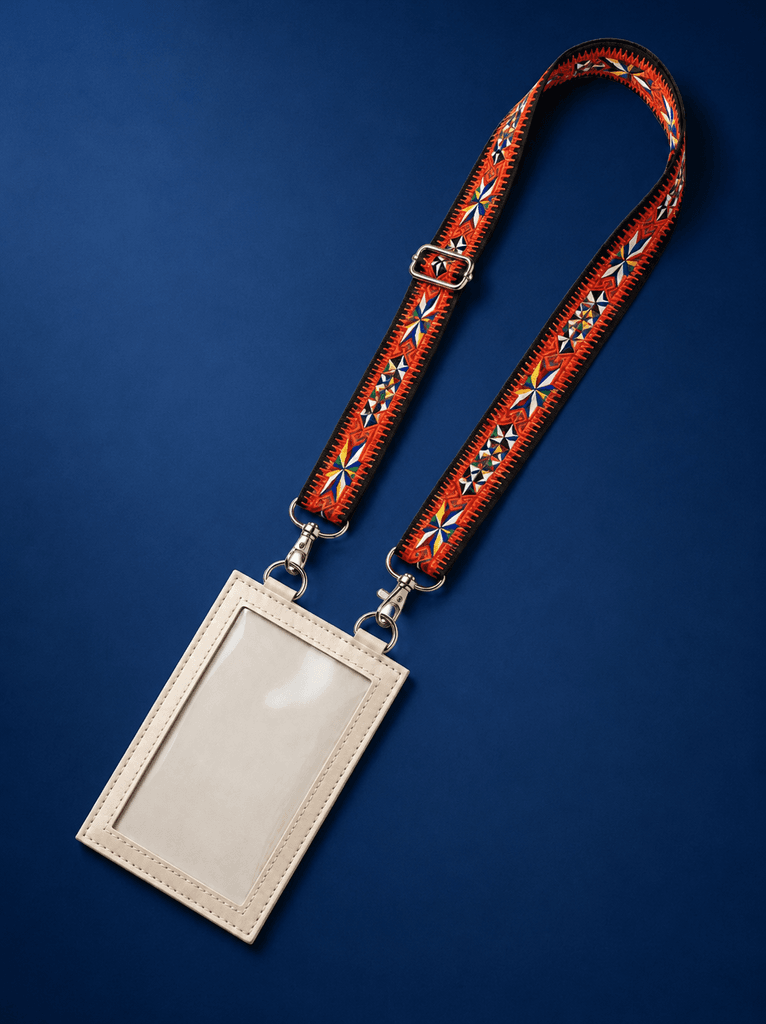
Songket is a luxury handwoven fabric traditionally made by interweaving gold or silver metallic threads into a silk or cotton base, historically reserved for Malay royalty and worn during weddings and formal ceremonies. Unlike batik’s flowing organic patterns, songket is defined by structured, geometric, and often symmetrical motifs, woven directly into the fabric rather than printed on top, giving it a raised, textured, reflective quality that signals prestige and craftsmanship.
That sense of prestige is exactly why songket motifs suit a passport cover. A passport is inherently a travel and status object, and applying songket’s metallic, structured geometric patterning onto a compact leather or fabric passport cover mirrors the formality and value songket has always carried in Malay culture. This pairing works particularly well as an ESG corporate gift Malaysia companies can hand to senior partners, executives, or VIP conference delegates, since a passport cover is carried on every business trip long after the event itself is over.
What is Peranakan Pattern?
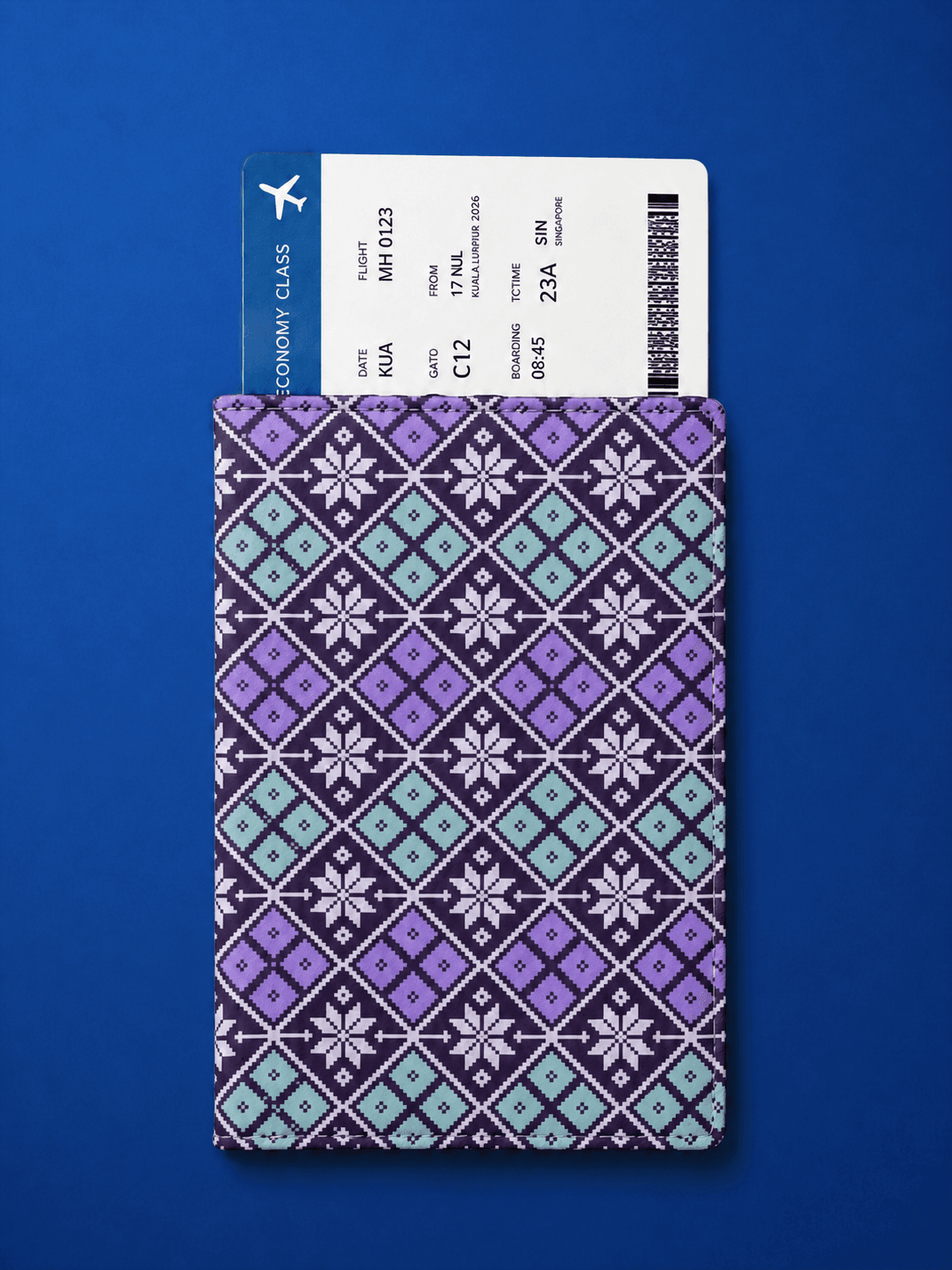
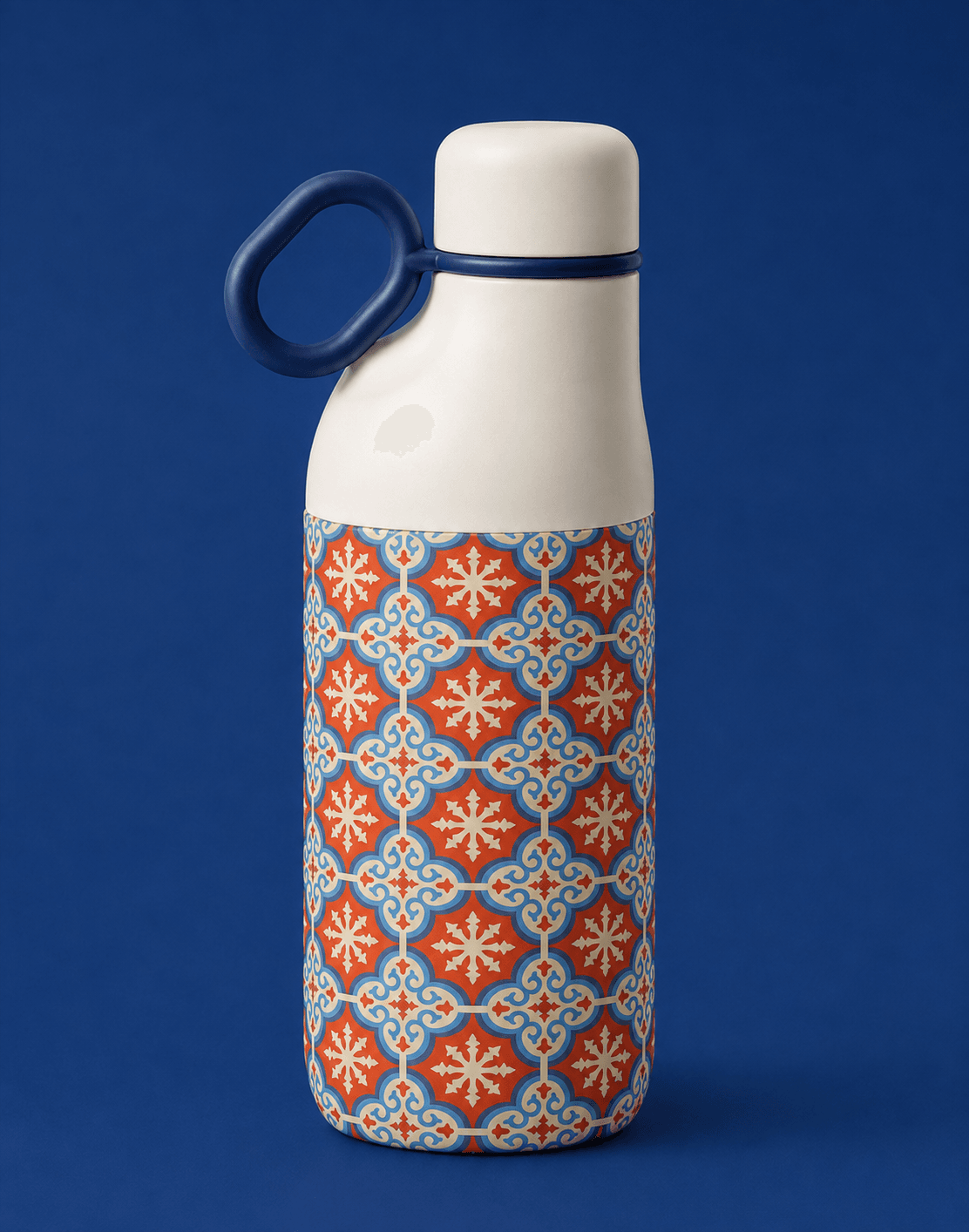
Peranakan, also known as Baba Nyonya, refers to the descendants of early Chinese settlers who intermarried with local Malay communities, primarily in Malacca and Penang, creating a distinct hybrid culture visible in food, architecture, and design. Peranakan pattern language is instantly identifiable: pastel colour palettes in pink, turquoise, and mint, combined with ornate floral and peony motifs, phoenix imagery, and the ceramic tile patterns commonly seen on Peranakan shophouse facades and traditional Nyonya kebaya embroidery.
These pastel, ornate motifs translate especially well onto a 2-in-1 tumbler, where the curved ceramic-like surface of a tumbler echoes the actual tiled surfaces the pattern originates from. A Peranakan-patterned tumbler used daily for coffee or water keeps the pastel floral motif visible in a practical, high-frequency-use object, making it a strong everyday piece within a premium sustainable gift set for corporate companies looking for a gift that feels decorative without being purely ornamental.
What is Pua Kumbu?
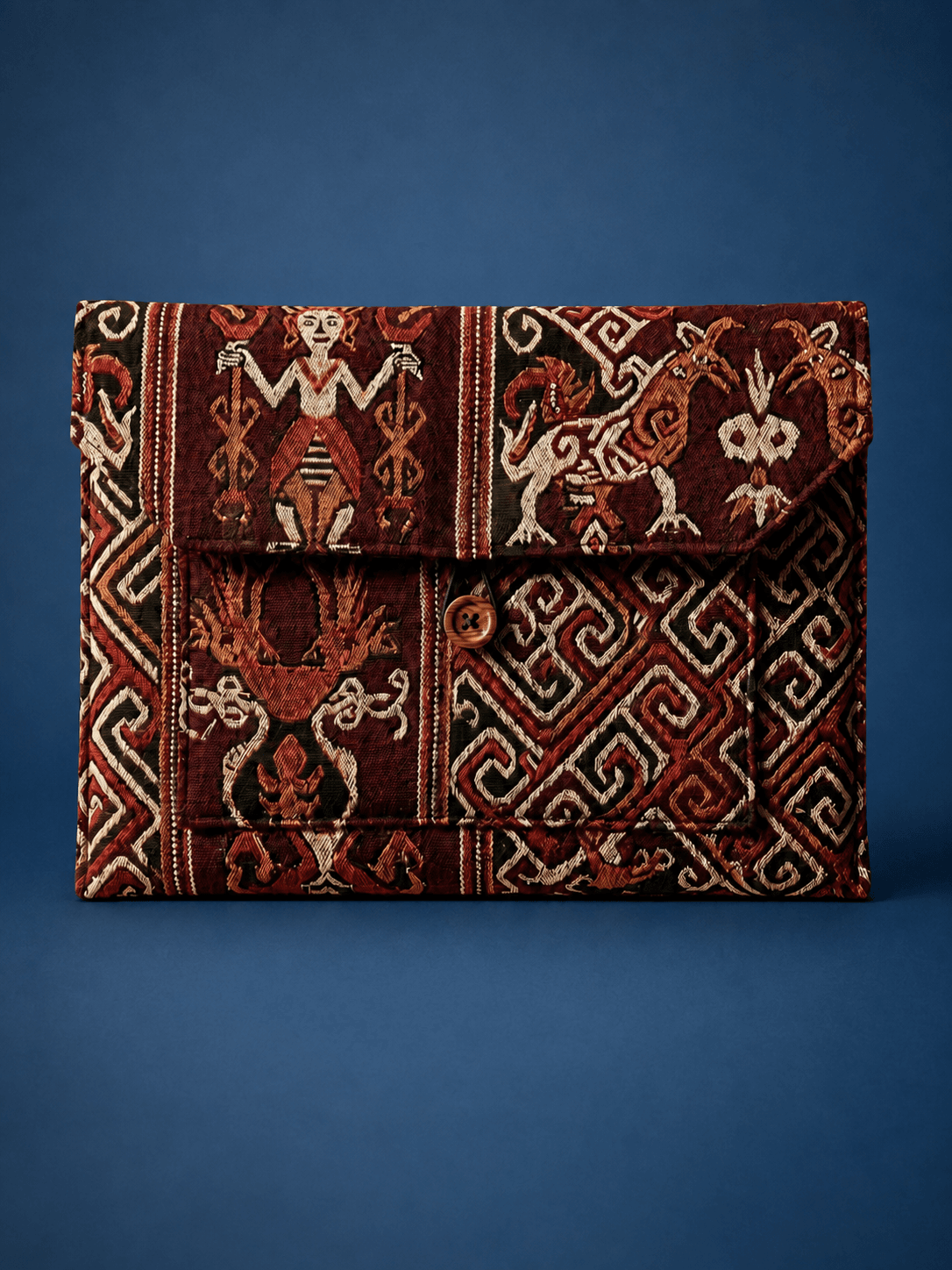
Pua Kumbu is a sacred handwoven textile from the Iban community of Sarawak, East Malaysia, traditionally created using the ikat dyeing technique, where threads are tied and dyed in patterns before weaving, producing bold, symmetrical, often reddish-brown and cream geometric motifs depicting spirits, ancestors, and nature. Pua Kumbu is not a decorative textile in Iban culture; it is deeply ritualistic, historically woven for rites of passage, ceremonies, and spiritual protection.
Its bold geometric symmetry and deep earthy colour palette translate well onto a waterproof laptop cover, a product that itself is about protection, echoing Pua Kumbu’s traditional role as a protective ceremonial textile. A laptop cover carrying Pua Kumbu motifs gives East Malaysian heritage genuine visibility in corporate gifting, an area where Sarawakian and Sabahan culture is rarely represented, making it a standout, conversation-starting piece within any sustainable corporate gift in KL programme aimed at making a distinct impression.
What is Malaysian Batik?
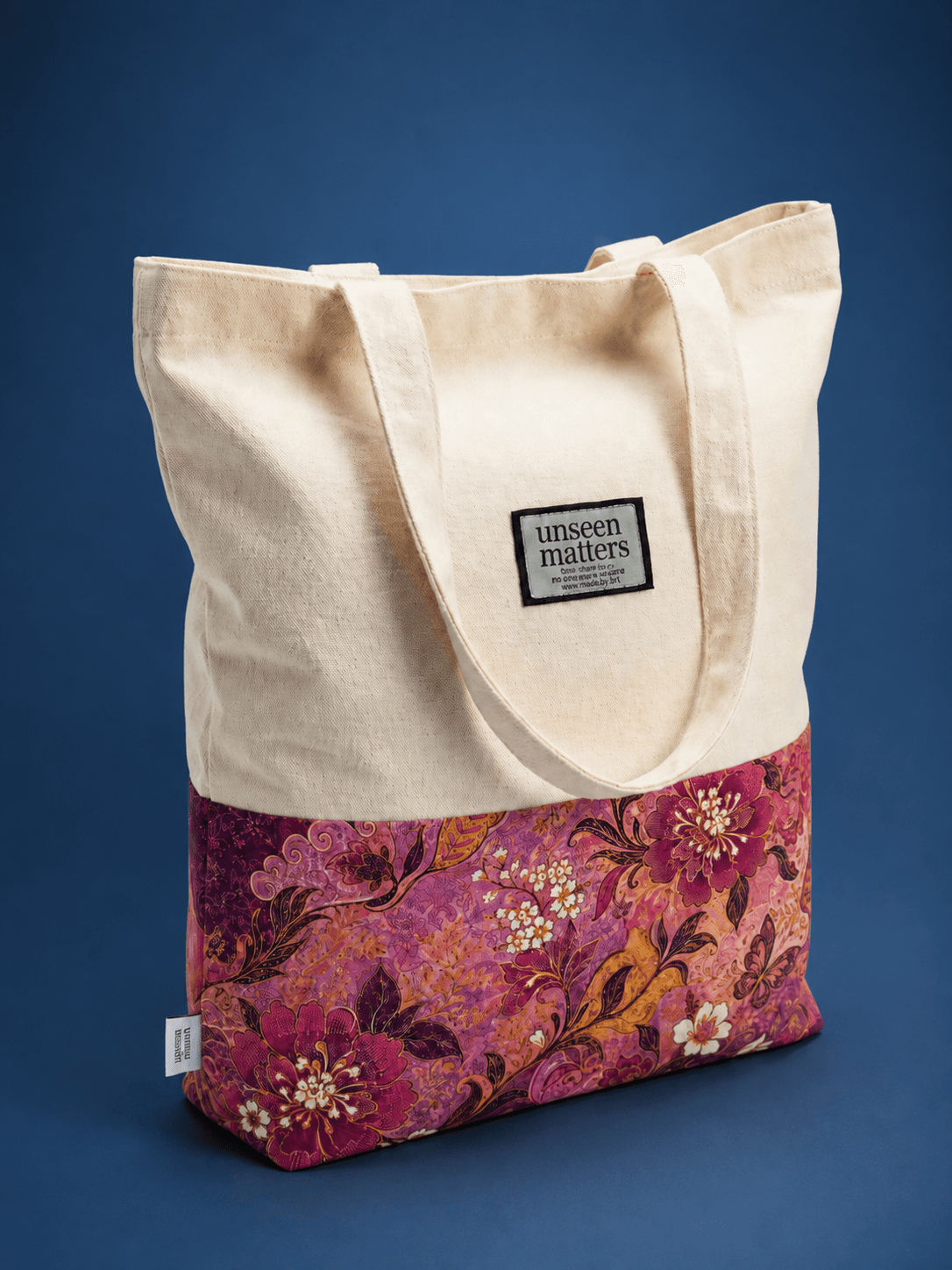
Batik is one of the most recognisable textile art forms in Malaysia, created using a wax-resist dyeing technique where hot wax is applied to fabric in intricate patterns before dyeing, leaving the waxed areas untouched by colour. The result is a design language built from florals, leaves, geometric borders, and flowing organic lines, traditionally hand-drawn (batik canting) or block-stamped (batik cap). Batik carries deep regional identity across Peninsular Malaysia, particularly the East Coast states of Kelantan and Terengganu, where it remains tied to royal courts, weddings, and festive dress.
On a canvas tote bag, batik motifs translate naturally because canvas offers a wide, flat surface similar to fabric, allowing the flowing floral linework and colour gradients of batik to be printed or screen-applied at full scale rather than shrunk into a small logo space. A batik tote bag functions as a genuinely usable, everyday item, while carrying a pattern instantly recognisable as Malaysian, making it a strong choice for a sustainable corporate gift in KL aimed at international clients or delegates who want to bring home something visibly tied to the country.
What is Qing Hua Ci illustration?
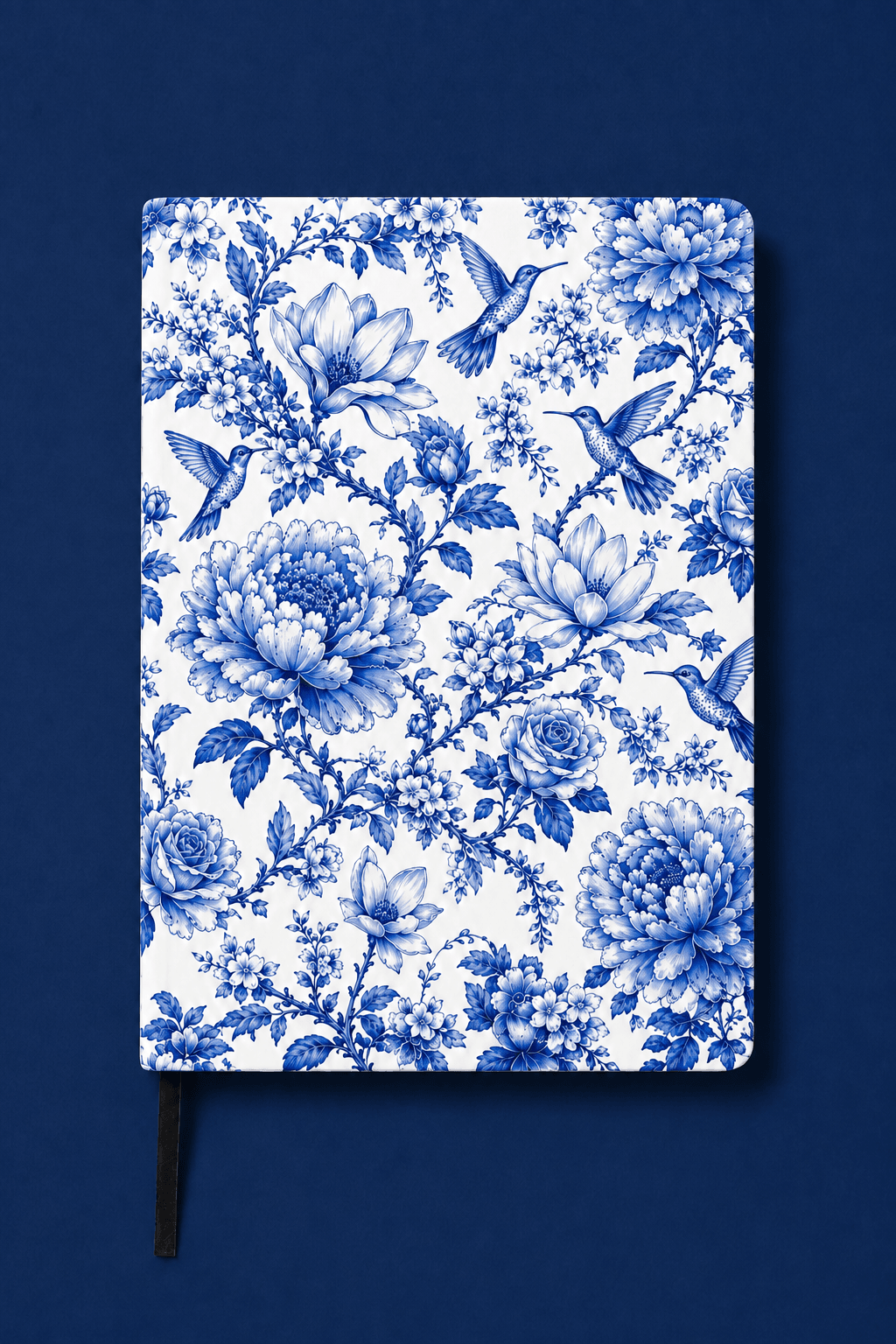
Qing Hua Ci, or blue and white porcelain, originated in China and became one of the most widely recognised ceramic art styles in the world, defined by cobalt blue hand-painted illustrations, dragons, phoenixes, florals, and landscape scenes, on a pure white porcelain base. This style deeply influenced Chinese-Malaysian material culture and remains visible today in traditional plates, vases, and teaware found across Malaysia’s Chinese communities.
The strong contrast between white and cobalt blue makes Qing Hua Ci one of the most graphically striking patterns in this list, which is why it works well printed across the cover of a notebook. The white base of a notebook cover mirrors the white porcelain surface almost directly, and the blue illustration work reproduces cleanly at a flat, printable scale. A Qing Hua Ci notebook offers a premium, distinctive alternative to the plain branded notebooks most companies already give away, useful as a sustainable conference event gift for note-taking-heavy events like seminars, workshops, and multi-day conferences.
What is Kolam Pattern?
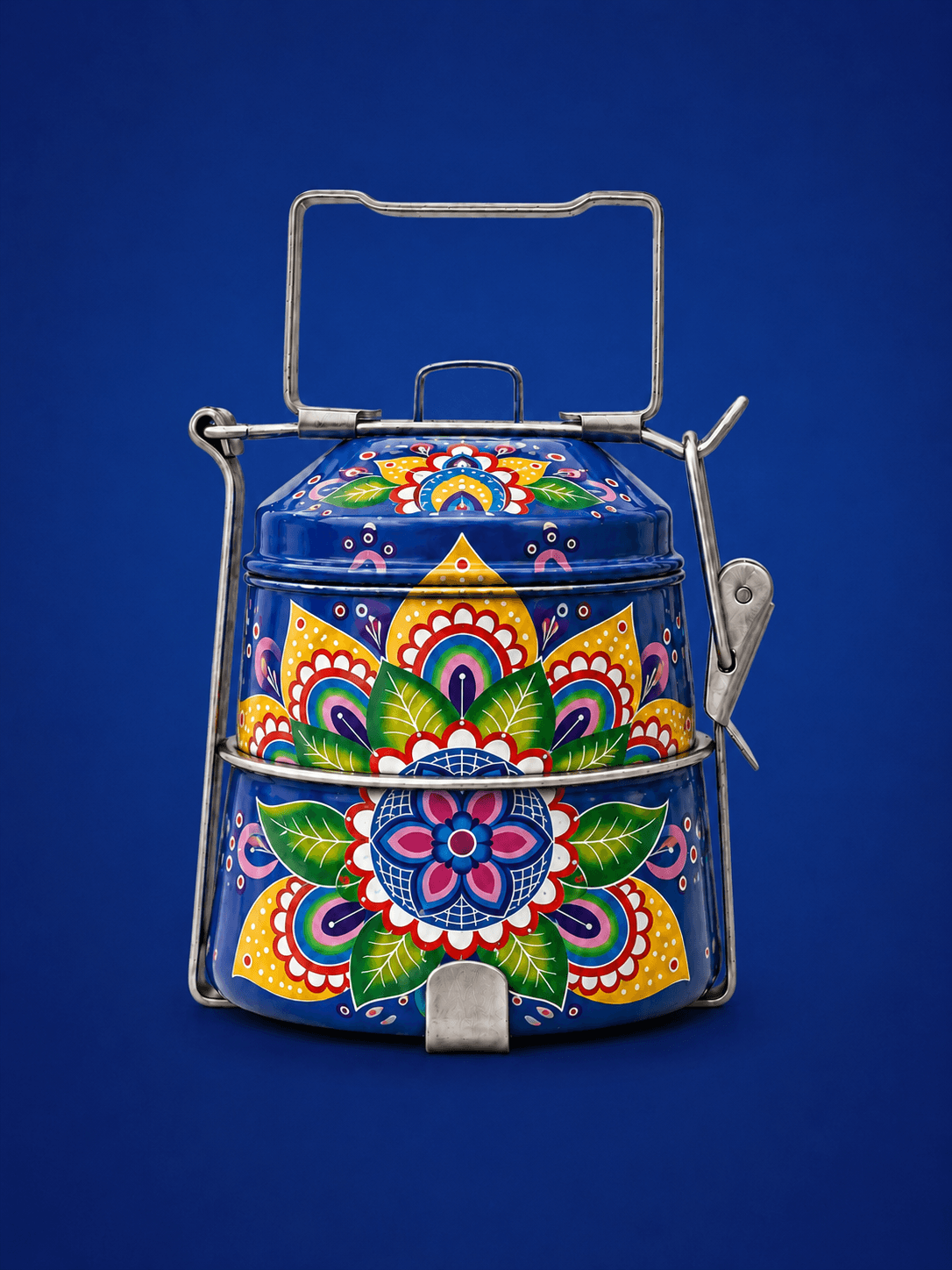
Kolam is a traditional South Indian art form, widely practiced within Malaysia’s Indian community, created by drawing intricate geometric patterns on the ground using rice flour, chalk, or coloured powder, typically outside homes as a daily ritual symbolising prosperity, welcome, and positive energy. Kolam patterns are built from symmetrical dots and looping lines forming mandala-like geometric structures, often in white or vibrant multicolour combinations.
Because kolam is traditionally associated with the home, food, and daily ritual, applying it onto a tiffin carrier is a particularly fitting pairing. A tiffin is itself a food-related object with strong cultural roots across Malaysian households, and printing kolam’s geometric, symmetrical patterning around the tiffin’s surface connects the object visually and culturally to its origin. This makes a kolam tiffin a meaningful, story-led item within a premium sustainable gift set for corporate companies, especially for events or clients with strong ties to Malaysia’s Indian community.
Why Malaysian Heritage Patterns Gifting Works For ESG And Conference Strategy
Beyond the visual appeal, this approach solves a real gap in Malaysian corporate gifting. Most sustainable gifts communicate an environmental story but say nothing about identity or place. Pairing a heritage pattern with a genuinely useful, customisable product allows a company to tell two stories in one object: a sustainability story through the product and material, and a cultural story through the pattern itself.
For companies sourcing an ESG corporate gift Malaysia programme or a sustainable conference event gift meant for international delegates, that combination is difficult to replicate with an off-the-shelf catalogue item.
Click on our portfolio page to explore more inspiration (click here)
How To Order
Each of these seven pattern-and-product pairings, batik on canvas tote bag, songket on passport cover, Peranakan on 2-in-1 tumbler, Qing Hua Ci on notebook cover, kolam on tiffin, Pua Kumbu on waterproof laptop cover, and Linangkit on double hook lanyard, can be ordered individually or combined into a full premium sustainable gift set for corporate companies and conference events. All patterns can be customised further with company branding worked into the design itself, keeping with Unseen Matters’ story first, sustainable gifting studio approach. Companies planning 2026 events or year-end client gifting are encouraged to reach out early to secure production timelines for custom pattern work.
YOUR COMMENT